Early Harvest for Local Gardens: Winter Sowing Guide for Synelnykove Residents
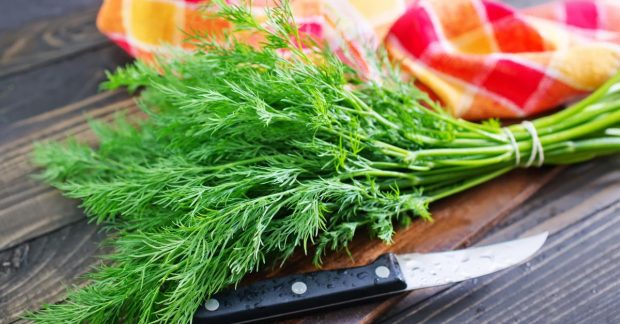
Sowing dill and parsley before winter allows for a much earlier harvest and ensures plant resistance to diseases and frosts.
 👥Society
Photo: UNIAN
Key points
- Sow only when temperatures stay below 5-7°C to prevent early sprouting.
- Increase seed quantity by 20% to compensate for winter conditions.
- Prepare furrows in advance but use dry soil for covering without watering.
For many residents of Synelnykove and surrounding communities who manage private garden plots, maximizing land productivity is a top priority. Winter greens — specifically dill and parsley — are capable of successfully overwintering in open ground and sprouting much earlier than those sown in spring. This method allows local gardeners to outpace commercial farmers and produce hardier plants that are less susceptible to common diseases.
Optimal Timing and Weather Conditions
The key to success lies in precise timing. Experts recommend sowing only when consistently cool temperatures with night frosts have set in. Typically, this occurs in late November or early December. It is crucial to monitor the weather forecast: if temperatures are expected to rise above 5–7 degrees Celsius in the coming week, sowing should be delayed to prevent premature germination.
Local traditions also offer guidance. It is widely believed that the ideal time to sow parsley is after all leaves have fallen from the trees and a thin layer of ice appears on puddles. At this stage, the soil has cooled sufficiently for the seeds to remain dormant until spring.
Planting Techniques and Maintenance
While the actual sowing takes place in slightly frozen ground, the beds should be prepared in advance while the soil is still workable. Furrows about 3 centimeters deep should be dug 25 centimeters apart a week or two before the planned planting date.
- Use 20% more seeds than usual to account for natural winter loss.
- Cover the seeds exclusively with dry soil or peat.
- Do not water the area after planting under any circumstances.
- If there is no snow cover during severe frosts, mulch the rows with dry leaves or compost.
Winter parsley and dill will begin to sprout around mid-spring. The primary advantage is that the seeds utilize moisture from melting snow, eliminating the need for initial manual watering. Gardeners must ensure they select specific winter-hardy varieties to guarantee survival through the cold months.
Source UNIAN — unian.ua/lite/ogorod/kak-posadit-ukrop-pod-zimu-i-petrushku-sroki-i… ↗
Read next
 🩺Health
Health Ministry expects sufficient flu vaccine supplies for Ukrainians
The Ministry of Health has assured that current flu vaccine stocks are sufficient to meet public demand, despite initial supply delays.
 🏛️Politics
Marine Le Pen opposes Ukraine's accession to EU and NATO
Leader of the French 'National Rally' party Marine Le Pen stated that she does not support Ukraine's integration into the European Union or the North Atlantic Alliance.
 🛡️Security
Zelenskyy announces strengthened defense against Russian jet-powered drones
The President of Ukraine held a Staff meeting focused on countering new types of enemy UAVs.
 🏙️City
President warns of new massive attack threats: what Sinelnykove residents should know
Volodymyr Zelenskyy reported on intelligence regarding upcoming Russian missile strikes and urged citizens to remain vigilant.
 🏙️City
Protecting the energy system: authorities prepare new steps to stabilize power supply
President Volodymyr Zelensky held a meeting on strengthening energy security and restoring electricity supply in Ukrainian regions.
 👥Society
NATO Secretary-General Rejects Russia's Demand to Revert to 1997 Borders
Mark Rutte stated that the Alliance finds Russia's proposal to return to 1997 borders 'unacceptable.' He also commented on the recent incident involving Russian missiles …